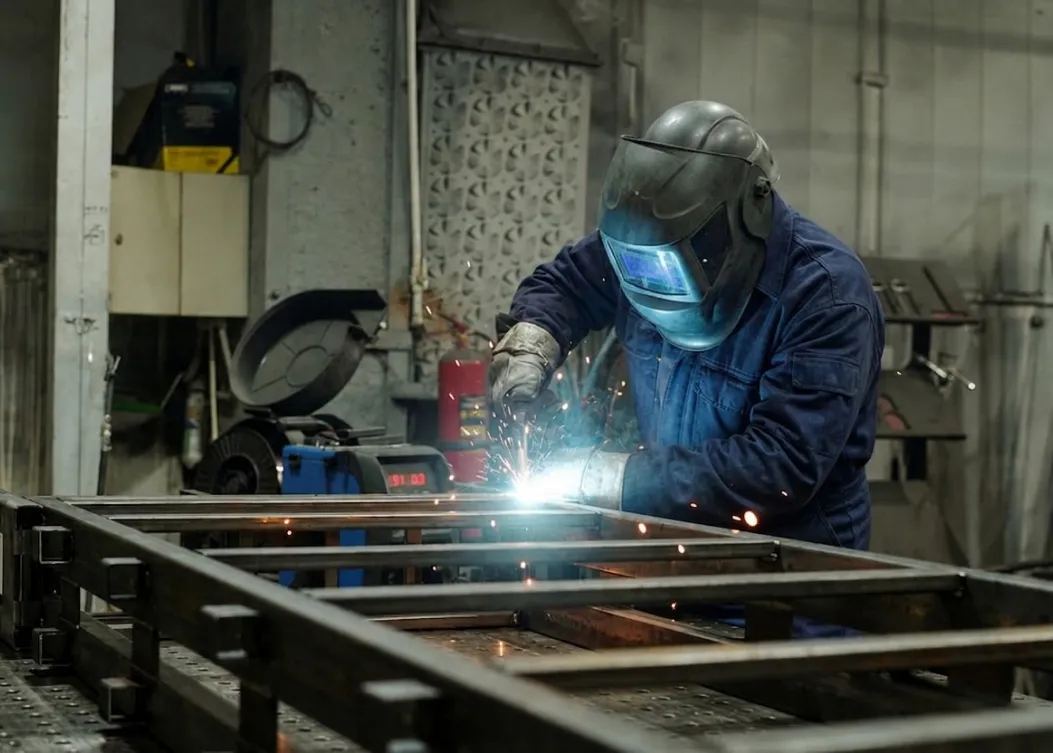

Customer trust doesn’t start in a conference room. It starts on the shop floor with the skilled decisions that keep a machine running right the first time.
When a customer walks onto the floor for a test run the confidence in the room isn’t accidental. It’s built on thousands of decisions made long before they arrive. What makes a customer return to the same machine builder for decades is skilled work that earns trust one decision at a time.
TL;DR Summary
Skilled work creates customer loyalty when machinists and assemblers make decisions that protect customers from downtime. Judgment, problem solving and collaboration drives trust. That trust fuels repeat work and attracts skilled people who want to own the outcome of their craft.
Customer loyalty is built by the tradespeople who make micro decisions every day. They protect customer operations, collaborate during builds, work together on test runs and take pride in machines that perform as designed from day one. Whether building new systems or modernizing existing equipment, the principle stays the same. Skilled judgment on the floor protects what matters most for the customer.
How Do Skilled Tradespeople Create Customer Loyalty?
Skilled tradespeople create customer loyalty because their experience protects customers from risk.
Customer loyalty doesn’t come from proposals or sales meetings. It’s built by the people programming the machine, fitting the parts and solving problems in real time. When a machinist makes a decision that prevents customer downtime, trust grows. When an assembler finds and fixes an issue before a machine ever leaves the bay, the customer might never see the problem but they feel the result.
LMC works across diverse industries. Nuclear. Food processing. Medical devices. Aerospace. Paper. Mining. Marine. Oil and gas. Power and utilities. Chemical processing. Some projects are new custom machines. Others are equipment upgrades, retrofits and modernization projects on machines that have been running production for decades.
Across all those applications the pattern is the same. Customers trust the machinist or assembler who makes the calls that keep a machine running right. The machine that ships out performs because of the judgment that went into building it.
Employees talk about ownership, about being the one who has to “make it right.” That decision authority is what customers experience as reliability. Customer loyalty starts with skilled tradespeople because they make the decisions that protect customer operations from downtime and field failures.
To understand how that trust’s built, it helps to look at what skilled decision making actually looks like on the floor.
What Makes Skilled Decision Making the Foundation of Customer Trust?
Trust’s built in everyday decisions.
Each build involves choices most people won’t see on a print. Datum selection that ensures downstream fit. Speeds, feeds and fixturing that protect material integrity. Assembly sequences that prevent rework in the field. Inspection steps that catch issues before shipping. Weld quality that has to hold under years of stress cycles.
On the floor, machinists and assemblers own the work in front of them. They program at the machine, decide how to fixture the part and make the adjustments that protect reliability. There’s no waiting on approvals or managers who’ve never run the equipment. That judgment on the floor keeps projects moving and prevents the downstream problems that cost customers time and money.
People here describe the work in those terms. A machinist talks about liking to do it all. Setup, programming and running. That’s what makes the work interesting. A 30-year assembler explains that nobody’s standing over his shoulder telling him every move. Leadership puts trust in skilled people to make decisions themselves. Another assembler says he worries more about what the customer will think than what the shop will. The reaction that matters to him is the reaction on the customer’s side, when a system runs as expected.
The invisible work prevents visible failures.
A machinist catches a tolerance issue before the part ships. An assembler spots a clearance problem during test runs and adjusts a detail that would’ve caused a bind in the field. A welder adjusts technique for a food grade finish that’ll be easy to clean and pass inspection. On retrofit and modernization projects those same skills are used inside the constraints of existing systems. Operators enhance performance without disrupting operations the customer depends on every day.
These decisions happen hundreds of times per build.
Production shops with nontechnical leadership who push forced overtime and rush throughput can’t replicate that judgment. Competitors who optimize for volume are in a different mindset. Custom machine builders and equipment modernization specialists have to optimize for first time fit and field reliability.
Quality systems and certifications provide a framework. Skilled judgment delivers reliability. Confident decision-making builds trust because customers know the judgment behind the machine’s as reliable as the machine itself.
That judgment becomes even stronger when customers and shop floor teams work together.
How Does Collaboration with Customers Strengthen Every Project?
Customers don’t just interact with account managers. When they come onsite they spend time with the people who build.
Customers bring product samples for test runs. Engineering teams from both sides gather around the same HMI screen. Machinists and assemblers listen to how the equipment’s used on a production line and adjust details accordingly. Assembly teams demonstrate functionality before shipping and work through scenarios customers know they’ll face in the plant.
Problems get solved collaboratively, not through a stack of change orders.
On retrofit and modernization work this collaboration’s even more direct. Customers watch existing equipment being enhanced without disruption. Controls are updated. Guarding’s improved. New sections are integrated into old frames. The people doing the work ask questions about current bottlenecks and how the line runs on a bad day, not just a good one. The customer sees that the team understands how the machine fits into operations, not just how it looks in the bay.
Shop floor workers speak the same language as customer engineering teams. They understand why certain decisions take time and can’t be rushed. When customers watch their machine come together, or see a legacy line being modernized, they see the skill involved. They also see where skilled people are willing to slow down in the short term to protect reliability in the long term.
Skilled tradespeople put themselves in the customer’s shoes. Problem solving happens with customers, not for them. Collaboration becomes part of the engineering process. Over time, teams that build and modernize machines become an extension of customer engineering and operations.
When an issue arises in the field, the people who answer the call are often the same people who watched the test run months earlier. For equipment upgrades and retrofits, working together ensures improvements enhance what’s working.
Collaboration increases confidence because customers see the knowledge behind the work and trust grows through shared problem solving. That trust shows up most clearly when it’s time to run for real.
Why Does First Time Fit Performance Create Long Term Loyalty?
On the floor, first-time fit is an expectation. Machines run right the first time because machinists and assemblers have already made hundreds of correct micro decisions. There’s no field rework. No scramble with a crew standing idle at the plant. Commissioning goes faster. Return on investment shows up sooner. Customers feel that performance from the first day a machine or upgrade starts producing parts.
Skilled judgment reduces rework, delays and install issues.
Machinists program their own setups and own downstream quality. They understand how their part fits into larger assemblies or integrates with existing systems. Assemblers own the whole system, not just isolated tasks like bolting on a component and moving on. Both groups make calls that protect customer operations, not just hit a cycle time on a single station.
That judgment’s essential for retrofit and modernization work.
Retrofitting controls on a 50-year-old machine that still runs production takes deep understanding. You can’t just start over. Modernizing a food processing line without disrupting operations demands precision and planning. Enhancing automation on equipment the customer can’t afford to replace means working within tight mechanical and electrical constraints.
For new custom machines, complexity, tight tolerances and regulatory requirements leave no margin for error. Nuclear grade work. High speed food packaging with strict hygiene requirements. Material handling and process equipment that runs in demanding conditions. Every project requires understanding what’s working and making it better without breaking what matters.
Employees talk about enjoying that kind of challenge. They’re proud to work on big projects that require real problem solving. Customers notice. They come back because complexity’s handled the right way the first time whether the project’s a brand new machine or a critical upgrade.
Customers stay because first-time-fit performance proves that the people building or modernizing the machine understand what’s at stake.
What Does Customer Confidence Look Like on the Shop Floor?
Customer confidence is visible long before the machine ships out. Test runs with customers create shared wins. When customers watch machines perform during onsite testing, it’s easy to see. People lean in. Questions get more specific. Problems get solved in real time with customer engineers present. Success is something both sides see and hear, not just read in a report later.
Pride flows both ways.
When a big build or major retrofit ships, the floor pauses to watch. Cranes move slowly. Teams gather for a moment before the truck pulls away. Everyone who touched that machine knows where it’s going and what it needs to do when it gets there.
Customers see the same pride during visits. They meet long tenured machinists and assemblers who can explain both the print and the reality of running the equipment. That emotional investment in the work translates into machines that perform.
Skilled people don’t want their name on work that fails in the field. One assembler describes walking through a grocery store and seeing product that came from a machine he helped build. That’s the kind of work that stays with him. For modernization and retrofit projects, the same pride shows up in protecting customer operations while delivering meaningful improvements.
Customer recognition matters. When customers return for another project or point out where an upgrade improved performance, the team feels it. It tells skilled people their judgment made a difference.
That kind of feedback strengthens long-term relationships. Fewer handoffs. Fewer explanations. Customers work with people who already know their equipment, their standards and their pressure points.
Confidence builds when skilled tradespeople take ownership of the work and customers see the results in their own plant.
Why Do Skilled People Want To Work Where Customer Trust Matters?
The same conditions that create loyal customers also attract and retain people who support and exemplify standards of excellence.
Skilled tradespeople want responsibility, variety and impact. They don’t want push-button work where judgment doesn’t matter. They want to see what their work becomes. They enjoy when customers are onsite and value their input. They want to work directly on new builds and modernization projects where decisions mean making a positive impact.
That creates a reinforcing loop.
Skilled work earns customer trust. Customer trust creates meaningful work. Meaningful work attracts more skilled people who want in. Over time that separates shops where people stay from shops where people churn.
Here machinists talk about owning the entire process. Programming at the machine, setting up, running and checking their own work. Assemblers describe careers that evolved over decades, moving from one discipline to another as their interests and skills grew. People talk about work that sticks with them. Machines they still think about years later because of what they did for a customer.
Shops that treat machinists like button pushers lose them to shops that trust their judgment. Customer collaboration isn’t a perk. It’s part of the work. Pride in customer success drives retention as much as competitive pay or benefits.
With 85% retention and careers measured in decades, the pattern’s clear. Work stays challenging across diverse industries. Ownership goes to people who know the work. Real flexibility respects life outside the shop. Skilled people can see a future in that environment.
The same work that earns customer loyalty also attracts the kind of people who want to build trust through skill, not speed or shortcuts.
What Does This Mean For Someone Considering a Skilled Career Here?
For someone in the trades, the trust matters. And it needs to go both ways.
Certifications matter too, but skilled judgment matters more. Process documents protect quality, but people create reliability. Customer loyalty comes from relationships built on performance, not promises.
Skilled work makes customers successful. Machinists and assemblers learn across industries, machines and technologies. Confidence and experience compound across custom builds, retrofits and modernization projects. People stay because the trust is real. Leadership trusts the floor to make decisions. Customers trust those decisions because they see the results in their own plants.
For customers reading the same story there’s a simple checklist.
Do customers visit the shop floor during builds? Do machinists and assemblers own their setups and decisions? Do the same people work there year after year? When problems arise do skilled tradespeople solve them directly with customers? For modernization projects does the team understand existing systems and customer operations?
The long-term advantage is the same on both sides.
New machines and equipment upgrades that run right from day one. Field support from people who built or modernized the original equipment. Partnerships that broaden and deepen across projects. Whether building new automation or enhancing existing equipment, the principle stays the same. Skilled judgment protects customer operations.
The Bottom Line
For skilled tradespeople this is the kind of work that makes a career.
Skilled machinists and assemblers work directly with customers on new builds and modernization projects. They make decisions that matter to customer operations. They see machines run in the field and know that their judgment made that possible. Whether building new automation or retrofitting legacy equipment, careers grow in places where skills and trust are built together, with the customer.
The same work that earns customer loyalty also attracts people who want to own the outcome of their craft.
For customers, first-time fit comes from skilled judgment and collaborative problem solving. Custom builds and equipment retrofits demand experienced teams that understand what they need. Partnership creates relationships based on reliability.
Explore careers at LMC and see what skilled decision making looks like in practice.
Explore Careers
Learn More:
- Custom machine building and automation
- Assembly, testing and customer collaboration
- Company overview, values and approach
Building Your Career Path
Precision Work. Full Ownership. Real Impact.
CNC Machining
Know What You Need to Do.
Set It Up.
Program and Run It.
Assembly
Make the Impossible, Possible.
See It Run.
Know It Works.
Welding
Weld Once.
Weld Right.
Zero Rework.
Key Takeaways
- Skilled work creates customer loyalty by protecting customers from downtime and field failures through hundreds of micro decisions per build.
- Decision making on the floor has more impact on customer trust than any brochure or spec sheet.
- Collaboration with customers builds confidence on both sides when machinists and assemblers work directly with customer engineering teams.
- First time fit performance sets custom machine builders and modernization specialists apart because it proves skilled people understand what's at stake.
- Long term employees create better customer outcomes because institutional knowledge compounds across multiple projects.
- Customer loyalty and talent attraction reinforce each other. Skilled work earns trust, trust creates meaningful work, meaningful work attracts more skilled people.
FAQs
Why does skilled work matter so much in custom machine building and modernization?
Every machine depends on thousands of micro decisions made by machinists and assemblers. Datum selection, feed and speed adjustments, assembly sequences and weld quality all determine whether the machine runs right on day one. Those decisions happen on the floor, not in conference rooms. When a machinist catches a tolerance issue before shipping or an assembler spots a clearance problem during test runs, customers avoid weeks of downtime and expensive field service calls. For equipment retrofits and modernization, these same skills protect existing operations while enhancing performance.
How does LMC build customer trust during complex projects?
Trust grows when customers can see the work and the people behind it. Customers come to the shop floor to watch machines being built, test equipment with actual product samples and work side by side with the machinists and assemblers doing the work. Problems are solved together during test runs and commissioning. Teams own the full setup and quality process. That transparency builds confidence because customers see the knowledge and judgment behind the machine. On modernization projects the same collaboration ensures improvements enhance existing systems without disrupting operations.
What does first-time fit mean in manufacturing?
First-time fit means the machine or upgrade works as designed the first time it's installed without rework or delays. Skilled tradespeople make this possible by owning their setups, understanding how their part fits into larger assemblies and making hundreds of correct decisions that protect field reliability. For equipment retrofits and modernization, first-time fit means enhancing performance without disrupting operations or breaking what already works. Customers experience this as faster commissioning, faster ROI and confidence in repeat builds.
How does this connect to recruiting?
Skilled people want to work where their judgment matters and where customer trust's earned through craftsmanship, not shortcuts. When machinists and assemblers see their work succeed in customer facilities, when they collaborate directly with customer engineers and when they take pride in machines that perform as designed, that creates the kind of meaningful work that attracts more skilled people. This creates a reinforcing loop. Skilled work earns customer trust. Customer trust creates meaningful work. Meaningful work attracts talent.
What industries trust LMC with complex builds and modernization projects?
Nuclear. Food processing. Medical devices. Aerospace. Paper manufacturing. Mining. Marine systems. Oil and gas. Power and utilities. Chemical processing and automation across manufacturing. Capabilities span custom machine design and build applications, build to print for high precision industries and equipment retrofits and modernization for legacy systems. In every case the same principle applies. Skilled judgment protects customer operations.
Why does employee retention matter to customers?
When customers return for additional projects, they work with the same people who built or modernized their equipment before. Long tenure means less time explaining context and more time solving problems. It also means deeper understanding of each customer's standards and constraints. For customers with legacy equipment, long-term employees understand existing systems and can enhance them without costly mistakes that come from lack of context.